

Hey {{first_name|Investor}} -
My stocks have one price, and it updates every second. My raw Birthday Pikachu doesn't have one. Twelve ungraded copies of that English promo sold in the second half of October, listed from damaged to near mint, and the best sale was more than 3 times the worst (PriceCharting). Nobody's graded mine, so I can only guess where it sits in that range.
Alternatives make sense when they do a job your stocks and bonds can't, at a cost you can see, with an exit you can live with. Here are the 4 tests I use for that, run on the four I own: venture funds, gold, bitcoin and cards.
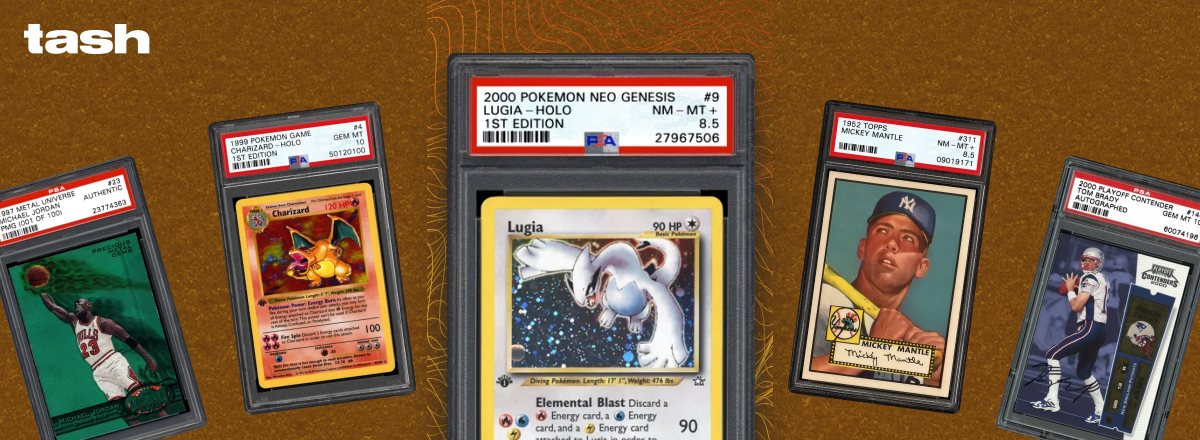
Before we continue, I want to thank Tash for sponsoring this issue. I accepted payment for this placement. Tash is building an index-style way to hold portfolios of graded trading cards, with the cards planned to be kept in a vault. It isn't open yet, and I haven't used it. Tash is pursuing SEC qualification under Reg A, and that hasn't happened. My tests apply to Tash too. Once it opens, I'd look at the fees, how the cards are valued, how they're stored and protected, and how I'd get out.
Join the waitlist here.
What counts as an alternative
Anything outside public stocks, bonds and cash. That covers private equity and venture funds, private credit, real estate, commodities like gold, crypto and collectibles.
You'll probably hear about them more. On March 30 the Labor Department proposed a rule that would make it easier for 401(k) plans to include private-market assets, real estate and crypto. It was still a proposal as of late October, and it doesn't require any plan to offer them.
Test 1: What job does it do?
I want to say it in one sentence. "It's going up" doesn't count.
Venture funds: a slice of young private companies I can't reach through a stock account.
Gold: something that doesn't depend on a company's earnings.
Bitcoin: a bet on scarcity. There will only ever be 21 million, and estimates of the coins already lost for good with their keys run from about 1.5 million to nearly 4 million (Chainalysis, 2017; Ledger). If more people want it, a supply that can't grow gets scarcer. It's close to the bet behind a rare card.
Cards: I like them. That's a real reason, and it isn't a portfolio reason.
The job also tells you what to expect. Gold gets pitched as crash protection, and the record is mixed. In the 2007 to 2009 crisis, gold rose 24.5% while the S&P 500 fell 56.8%. In the Covid crash of February and March 2020, gold fell 2.5% while the S&P 500 fell 33.9% (Yahoo Finance data, as compiled by CryptoTicker on October 31). It beat stocks both times, and only one of those was a gain.
It can also fall on its own. Gold closed November 3 at about $3,922 an ounce, about 29% below its January 28 record of $5,513 (both from Rio Times).
Bitcoin gets the same pitch, and its record is worse. It fell 33.4% in that Covid crash, about what the S&P 500 did, and 58.8% from January to October 2022 while the S&P 500 fell 25.4% (same source). On the morning of November 3 it traded near $77,000, about 39% below its October 2025 high (Fortune). So I don't count on either one rising in a crash.
Test 2: Can you wait?
Venture funds commonly run 10 years, often with extensions, and you can't choose your exit date. Carta's latest report, published September 23, puts the median 2017 fund at 37 cents of cash returned per dollar paid in, and the median 2019 fund at 4 cents. That counts cash paid back, not what the funds still hold. Those 2017 funds are almost 10 years old, which shows how long the wait for cash can be.
Some private-credit funds offer a quarterly exit instead of a 10-year lockup, and those have limits too. They usually cap withdrawals, often at 5% of the fund a quarter. In the third quarter, investors in Cliffwater's roughly $30 billion private lending fund asked to pull about 16% of their shares, and the fund took back 5%, about a third of each request (AltsWire, October 15, citing the fund's letter to shareholders). The cap did what it was built to do. A fund holding loans with no daily market can't hand everyone their money at once.
Bitcoin trades around the clock, and that still doesn't guarantee you can reach yours. Binance halted withdrawals after hackers took about $6.3 billion on October 29, then reopened them in phases from November 1 (TechCrunch, CBS News).
Read the exit terms before you want out. My rule for a venture fund is money I won't touch for 10 years.
Test 3: What does it cost, all in?
Stocks train you to think about fees as close to zero. Alternatives don't work that way.
Venture funds: commonly about 2% a year in management fees and 20% of the profits. That's a guideline, and terms vary. Mine are tiered.
Gold: cheap to hold through an ETF, with a catch at tax time. In a taxable account, the IRS caps the federal rate on long-term collectibles gains at 28%, against a top rate of 20% for stocks, and CNBC reports that physically backed gold ETFs fall under the collectibles rate.
Bitcoin: most US spot bitcoin ETFs charge 0.25% a year or less, and the IRS treats bitcoin as property, so bitcoin held as an investment for over a year gets regular long-term rates. Holding it directly skips the ETF fee, but cold storage is honestly kind of inconvenient.
Cards: eBay's fee on a trading card is about 13.25% of the first $7,500 of the total sale, shipping and sales tax included, for a seller without a store, plus a small per-order fee, and grading adds its own fee if you want a number on the slab.
Test 4: Can you trust the price?
A price that doesn't move isn't the same as low risk.
Private funds usually value their holdings every quarter, using estimates, so their reported returns can look smoother than prices in a market that trades every day. Cliff Asness of AQR calls this "volatility laundering." My card does the same thing. It looks stable on my shelf because nobody's pricing it.
Gold and bitcoin pass this one. Gold has a live market price every trading day, and bitcoin trades around the clock. That's also why you can watch them fall.
My four, side by side
Venture funds | Gold | Bitcoin | Birthday Pikachu | |
|---|---|---|---|---|
Job | Private companies I can't reach otherwise | Doesn't depend on earnings | A bet on scarcity | I like it |
Waiting | Years, on the fund's schedule | Can sell any trading day | Any trading day through an ETF, any time on an open platform | Whenever a buyer shows up |
Cost | Annual fee plus a share of profits | Low to hold, higher tax rate | Low ETF fee, or the hassle of cold storage; regular long-term rates | Selling fees, grading |
Price | Quarterly estimates | Live | Live, around the clock | Last sale of a similar copy |
When they don't make sense
You can't say the job in one sentence.
You might need the money before the exit terms let you have it.
You can't name what you're paying, all in.
Losing all of it would change your plans.
My limit is 25% of my portfolio, for all my alternatives together. I hold them because I want some of my money moving differently from my stocks. The record above shows that doesn't always happen, bitcoin especially, so 25% is the most I'll put outside stocks and bonds. Crypto is the biggest piece of it.
The Pikachu sits in there too, but it's a hobby first. I collect the cards I want. I still look at them with an investor's eye, so I lean toward ones I think are cool and unique. Choosing that way takes deep knowledge of one game and its market, and most people don't have it.
— Koh
P.S. Know what you'll do the next time the market swings, before it happens. I'm opening 5 beta seats for a 12-week, 1:1 program to build your own investor operating system with AI, and the first seat starts in December.
Figures as of the dates given.
Disclaimer: Nothing in this email, the Reset and Invest newsletter, the Make Your Own Alpha book, or any course or digital product from Starshine Media LLC constitutes investment advice or a recommendation to buy or sell any security. Numbers and observations are as of publication. I may hold positions in companies discussed. Always do your own research and consult a licensed financial advisor before making investment decisions.
TASH IS “TESTING THE WATERS” UNDER REGULATION A UNDER THE SECURITIES ACT OF 1933. THIS PROCESS ALLOWS COMPANIES TO DETERMINE WHETHER THERE MAY BE INTEREST IN AN EVENTUAL OFFERING OF ITS SECURITIES. TASH IS NOT UNDER ANY OBLIGATION TO MAKE AN OFFERING UNDER REGULATION A. IT MAY CHOOSE TO MAKE AN OFFERING TO SOME, BUT NOT ALL, OF THE PEOPLE WHO INDICATE AN INTEREST IN INVESTING BY JOINING THIS WAITLIST, AND THAT OFFERING MIGHT NOT BE MADE UNDER REGULATION A. IF TASH DOES GO AHEAD WITH AN OFFERING, IT WILL ONLY BE ABLE TO MAKE SALES AFTER IT HAS FILED AN OFFERING STATEMENT WITH THE SECURITIES AND EXCHANGE COMMISSION (SEC) AND THE SEC HAS “QUALIFIED” THE OFFERING STATEMENT. THE INFORMATION IN THAT OFFERING STATEMENT WILL BE MORE COMPLETE THAN THE INFORMATION TASH IS PROVIDING NOW, AND COULD DIFFER IN IMPORTANT WAYS. YOU MUST READ THE DOCUMENTS FILED WITH THE SEC BEFORE INVESTING.
NO MONEY OR OTHER CONSIDERATION IS BEING SOLICITED, AND IF SENT IN RESPONSE, WILL NOT BE ACCEPTED. NO OFFER TO BUY THE SECURITIES CAN BE ACCEPTED AND NO PART OF THE PURCHASE PRICE CAN BE RECEIVED UNTIL AN OFFERING STATEMENT FILED BY TASH WITH THE SEC HAS BEEN QUALIFIED BY THE SEC. ANY SUCH OFFER MAY BE WITHDRAWN OR REVOKED, WITHOUT OBLIGATION OR COMMITMENT OF ANY KIND, AT ANY TIME BEFORE NOTICE OF ACCEPTANCE GIVEN AFTER THE DATE OF QUALIFICATION. AN INDICATION OF INTEREST INVOLVES NO OBLIGATION OR COMMITMENT OF ANY KIND.